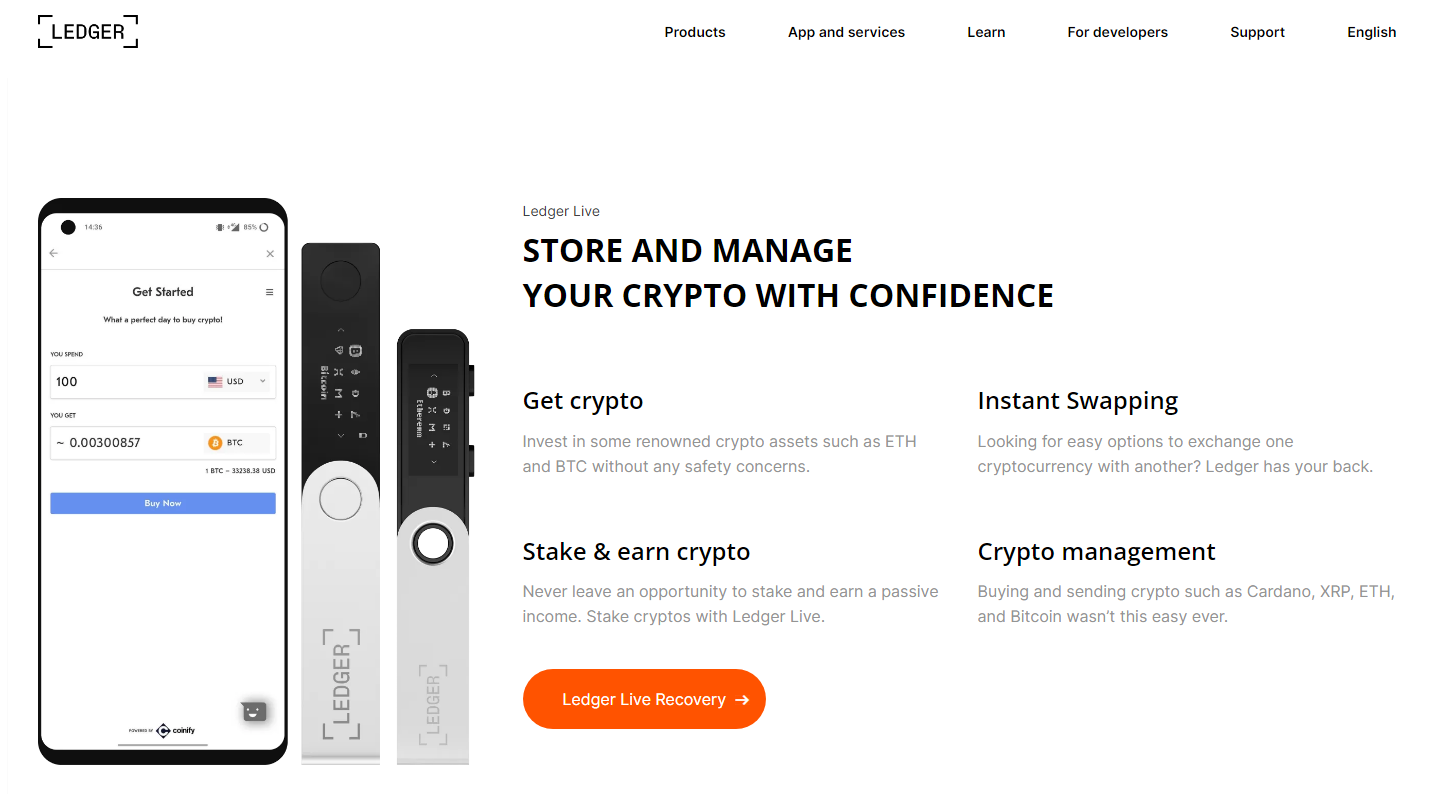
As digital currencies become more widely adopted, the methods used to protect them have grown increasingly important. Unlike traditional financial accounts that rely on passwords and centralized recovery systems, cryptocurrency ownership depends on direct control of private keys. Ledger login is designed around this principle, offering a hardware-based authentication system that prioritizes security, independence, and user ownership.
This article explains the Ledger login system, how it operates, what users need to access their wallets, and why it is considered one of the safest approaches to crypto asset management.
Ledger is a manufacturer of hardware wallets, which are physical devices built to store cryptographic private keys offline. These wallets are specifically designed to protect users from online threats such as malware, phishing scams, and unauthorized remote access.
Ledger wallets are commonly chosen by users who want:
Ledger devices work alongside Ledger Live, a companion application that allows users to view and manage their assets without compromising private key safety.
Ledger login does not follow the conventional login model used by websites or exchanges. There are no accounts hosted on Ledger servers and no login credentials stored online.
Instead, Ledger login is based on:
Access is only possible when all three conditions are met.
Most crypto theft occurs through compromised passwords, fake websites, or infected devices. Ledger minimizes these risks by isolating private keys within a secure hardware environment.
Security benefits include:
Even if a computer or smartphone is compromised, funds remain secure without physical access to the Ledger device.
The Ledger login process is designed to be both secure and user-controlled.
The user connects the Ledger wallet to a computer via USB or to a smartphone via Bluetooth (supported models).
The device requires a PIN entry using physical buttons, preventing digital interception.
Once unlocked, Ledger Live becomes accessible for account management and transaction preparation.
Every transaction or account-related action must be verified directly on the Ledger device.
This ensures that no operation can occur without user awareness.
Ledger Live does not function as an authentication authority. Instead, it serves as a visual interface that communicates with the Ledger device.
Key characteristics:
Ledger Live cannot authorize actions on its own.
Ledger login security is established during the first-time setup.
Users select a PIN that must be entered every time the device is accessed.
A 24-word recovery phrase is generated, acting as the only backup to the wallet.
Ledger Live verifies the authenticity of the hardware wallet.
After setup, logging in requires only the device and PIN.
Security remains consistent across platforms.
Once logged in, users can manage thousands of digital assets, including:
Each blockchain requires a corresponding app installed on the Ledger device.
Often caused by cable or driver issues.
Solution:
Update Ledger Live and change USB ports or cables.
Multiple incorrect entries trigger an automatic device reset.
Solution:
Restore the wallet using the recovery phrase.
May occur due to pairing errors.
Solution:
Clear previous connections and re-pair the device.
PIN codes cannot be recovered.
Solution:
Reset the device and restore using the recovery phrase.
The recovery phrase is the foundation of Ledger login security.
Important guidelines:
Anyone with the recovery phrase can access the wallet without the device.
CategoryLedger LoginCentralized WalletsKey storageOfflineOnlineLogin methodHardware + PINPasswordUser controlFullLimitedRisk exposureMinimalHigher
Ledger login emphasizes ownership and control.
Ledger devices can be connected to decentralized applications through third-party wallets.
This allows users to:
All transactions still require hardware confirmation.
Ledger login does not require personal data. However, blockchain transactions are publicly visible. Ledger improves security but does not provide anonymity.
These trade-offs are intentional for enhanced security.
Ledger login represents a security-first approach to cryptocurrency access. By eliminating online credentials and requiring physical confirmation for all sensitive actions, Ledger significantly reduces the risks associated with digital asset management.
For users seeking long-term protection, self-custody, and independence from centralized platforms, Ledger login remains one of the most reliable access systems available in the crypto ecosystem.